The 4-Stage Sewage Remediation Protocol
Biohazard water remediation cannot be treated like a simple clean-water spill. Wastewater contains pathogenic micro-organisms, viral agents, and toxic gases that require specialized engineering controls, commercial-grade personal protective equipment (PPE), and continuous psychrometric monitoring.
Stage 1: Contact Our Team & Immediate Emergency Triage
The remediation process begins the moment you dial 1-844-552-7447. Our 24/7 emergency dispatch coordinators immediately walk you through vital first-hour life-safety protocols while checking crew availability:
- Plumbing Lockdown: Cease using all water fixtures immediately. Any water sent down an upstairs sink, shower, or toilet will flow directly out of the lowest basement drain or lower-level toilet.
- Electrical Hazard Isolation: Never step into standing sewage to access an electrical breaker, furnace switch, or submerged wall outlet. If the electrical service panel is located inside the flooded area, call an electrician or your power utility from a dry floor before touching anything.
- HVAC System Shutdown: Switch off your furnace, heat pump, or central air conditioner at a dry thermostat. Running the blower fan draws sewer gases and airborne microbial bio-aerosols into ductwork, cross-contaminating the entire home.
- Evacuation of Vulnerable Occupants: Keep infants, elderly family members, and individuals with compromised immune systems completely away from wet levels.
- Immediate Intake Assessment: Our coordinator documents whether wastewater is still actively rising, which levels are affected, whether the building is on municipal sewer or septic, and whether a plumber or city sewer crew is already en route.
Stage 2: On-Site Initial Assessment & Hazard Control
Upon arrival, our technicians confirm that the water is Category 3 black water, verify that the entry of new wastewater has ceased or is being addressed by a plumber, and conduct a thorough site safety review:
- Hazard Verification: Crews inspect the property for electrical hazards, structural weakening of subfloors, and gas buildup before energizing any restoration equipment.
- Thermal Imaging & Moisture Mapping: Using non-invasive infrared cameras and calibrated moisture meters, technicians track the hidden path of wastewater behind baseboards, beneath flooring, and inside wall cavities.
- Itemized Photographic Documentation: Before any demolition begins, we take comprehensive digital photographs and compile a room-by-room inventory of damaged structural materials and contents to support your homeowners insurance claim file.
- Clear Trade Demarcation: If the municipal main or private lateral is still blocked, a licensed plumber or municipal crew is designated to open the line. Our technicians focus strictly on containing and eliminating the indoor biological hazard.
Stage 3: Professional Sewage Extraction, Containment & Remediation
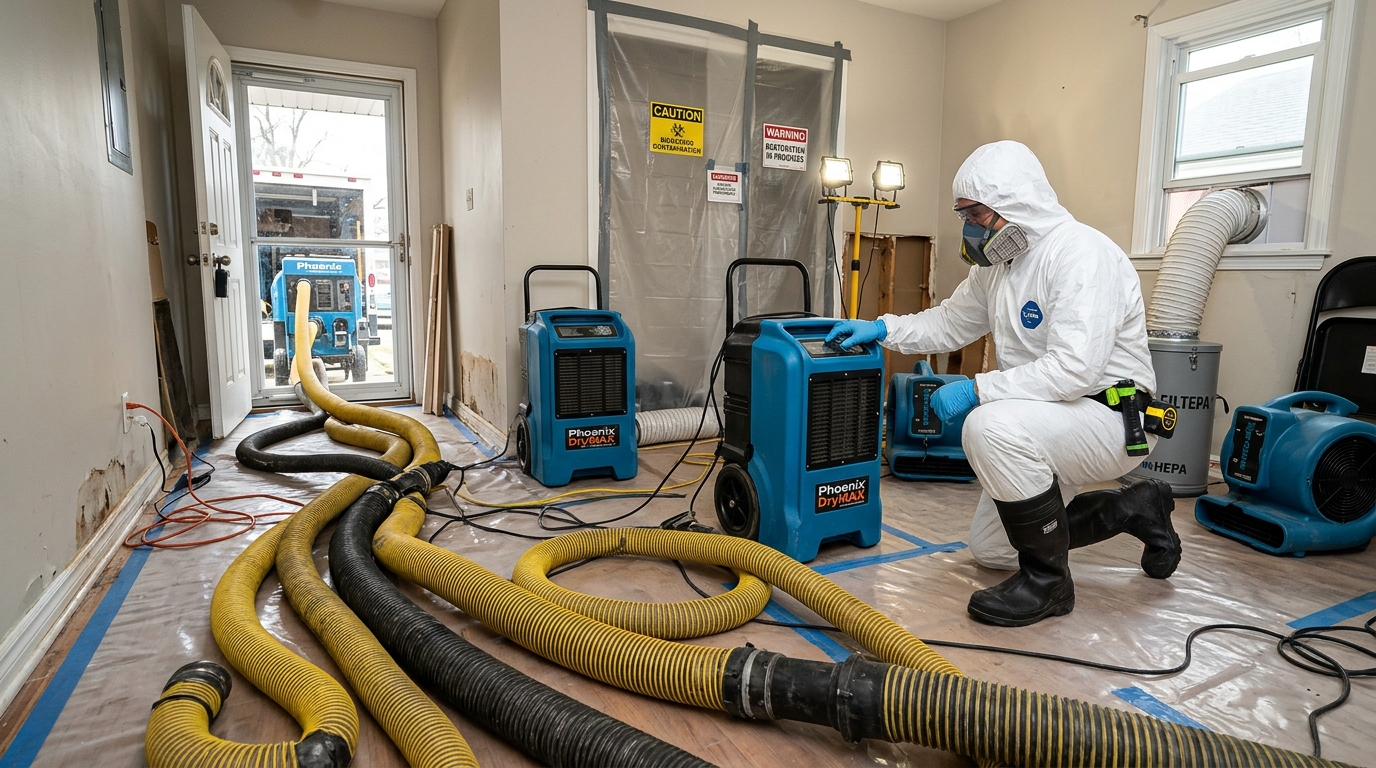
Once the scope is documented, our technicians establish negative air containment corridors to prevent the migration of bio-aerosols into clean rooms:
- Containment Barriers: Heavy 6-mil polyethylene plastic barriers are installed across doorways and HVAC supply registers. Commercial air scrubbers equipped with HEPA filtration exhaust air outside, maintaining negative pressure.
- High-Volume Waste Extraction: Commercial submersible trash pumps extract standing bulk sewage, followed by truck-mounted vacuum units that pull wastewater and sludge from concrete foundation pores and tile joints. All liquid waste is transported and disposed of lawfully; nothing enters exterior storm drains.
- Controlled Flood Cuts: Drywall draws wastewater upward through capillary wicking. Technicians make straight horizontal flood cuts 12 to 24 inches above the highest moisture waterline, exposing the wall cavity for inspection and drying.
- Porous Material Tear-Out: Under ANSI/IICRC S500 guidelines, porous goods that have absorbed raw sewage cannot be sanitized. Contaminated carpet, cushion padding, wooden tack strips, saturated drywall, and wet fiberglass insulation are bagged and safely hauled off.
- Two-Step Antimicrobial Sanitization: Exposed framing studs and masonry subfloors are thoroughly washed with specialized detergents to remove organic biofilms, followed by the application of EPA-registered hospital-grade biocides strictly following label dwell times. Bleach is never mixed with ammonia.
Stage 4: Psychrometric Structural Drying & Final Inspection
Disinfection alone does not save a building from secondary mold growth and wood rot. Structural framing must be dried to equilibrium moisture content:
- Industrial Drying Systems: Crews deploy industrial Low Grain Refrigerant (LGR) dehumidifiers and high-velocity commercial air movers to extract trapped moisture from framing timbers, joists, and concrete slabs.
- Daily Moisture Logs: Technicians monitor and record relative humidity, temperature, and moisture content daily using penetrating pin meters. Drying machines run until materials reach pre-loss baseline standards, not until an arbitrary timer expires.
- Final Inspection & Clearance: Once moisture levels reach verified dry standards, equipment is deodorized, sanitized, and removed.
- Insurance Documentation Packet: The property owner receives a complete file containing time-stamped photographs, moisture logs, scope sheets, and disposal inventories to facilitate claim settlement.
- Reconstruction Readiness: Reconstruction and cosmetic rebuilding—such as hanging new drywall, installing flooring, and replacing trim—are quoted as a separate bid and begin only after the space is clean, disinfected, and certified dry.
Why Our Process Separates Cleanup from Plumbing and Rebuilding
Restoration transparency requires keeping distinct trades separate:
- Plumbing is Not Cleanup: A plumber cables lines and inspects pipes with cameras. They do not carry negative air scrubbers, hospital-grade biocides, or industrial dehumidifiers to sanitize contaminated living areas.
- Cleanup is Not Rebuilding: General contractors install drywall and flooring. Beginning cosmetic rebuilding while wood framing is still wet traps bacterial contamination inside wall cavities, leading to structural rot and severe indoor air quality issues.
- No Hidden Bundled Packages: By keeping cleanup, plumbing, and rebuilding on distinct invoices, homeowners and insurance carriers see exactly what services were performed and why.
Need Immediate Professional Remediation? Call 1-844-552-7447
Do not attempt to clean raw sewage with a household mop and bleach. Call Sewage Backup Cleanup Pros at 1-844-552-7447 for 24/7 emergency dispatch. Provide your street address and loss details, and our coordinators will deploy an equipped biohazard remediation crew to protect your home and family.